Concrete parking lot building in Castro Valley CA - a lot built for the traffic it gets
Cracked, sinking parking lot or bare ground to pave? We plan and pour a concrete lot sized for the cars and trucks it will carry.
What does it take to build a concrete parking lot in Castro Valley?
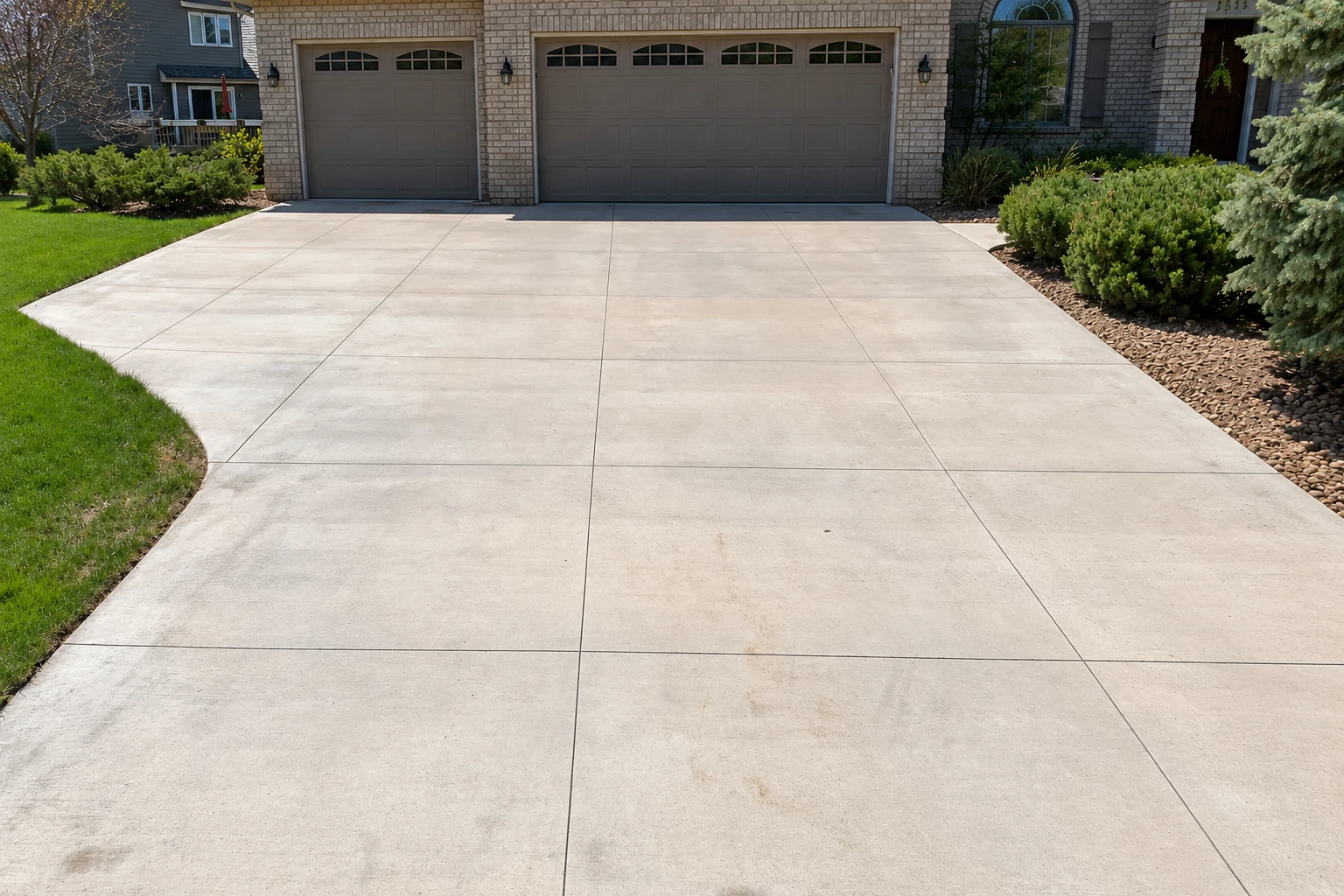
Concrete parking lot building in Castro Valley means getting the ground even and graded, then forming and pouring a concrete surface where cars and trucks park. When it's planned around how the lot is really used, a concrete lot can be an economical surface that serves for many years with little upkeep, and most of the effort goes into planning and ground work before the pour.
Most lots we're asked about are either bare ground that needs paving or an old lot that's cracked, sinking or pooling water after every storm. The price turns on the lot's size, how thick it has to be for the vehicles it carries, how much ground work the soil needs, the slope, and whether old paving has to come out first. The schedule turns mostly on County permit steps and the weather on pour day. We check with Alameda County early and handle the application when a lot needs a permit, and my estimate spells out what's included so you can see what drives your number.
- Licensed and insured.
- Free on-site estimates.
- We respond within 1 business day.
Concrete paving, footings and site work
How we build a concrete parking lot
I start with what traffic the lot will carry and how big and sloped the site is, because that sets the thickness, the scope and which County steps apply. Then we work on the subgrade, the soil the slab sits on. A concrete lot doesn't need a special base layer, but that soil has to be the same all the way across, so we dig out soft or different patches, replace them with soil like the rest and pack it down instead of raking it level and hoping. We grade it so water runs away from buildings, set forms and pour in the cooler part of the day so the top doesn't come out weak and dusty later. A broom finish, a light texture dragged across the surface, gives tires and shoes grip, and we cut control joints, grooves that give the slab a planned place to crack, the same day so cracks don't wander. If the budget gets tight, I'd rather trim the finish than the ground work, since nobody sees the base on day one but you can't fix a bad one without tearing the slab out. Before we wrap up, we also talk about upkeep years out so you can budget for it now.
A lot rarely stands alone. Anything that has to stand up on or beside it, like a light pole, a carport post or a low wall, needs concrete footings to hold it, and we place them before or alongside the paving so the plan fits together. If the building the lot serves has sunk at one corner, foundation raising comes first, because new paving should meet the building where it's going to stay.
Why Castro Valley property owners call P&J Castro Valley Concrete Company
I walk every lot myself
I come out to look at the lot and write the estimate myself, and our crew lead runs the work with our own crew. The person who set the plan with you is the same one the crew answers to.
Scheduling background, in business since 2017
I spent years lining up crews, pumps and concrete deliveries for a busy construction company before starting this business in Castro Valley in 2017. On a lot, that means the order of work is set before the first truck shows up.
Hillside rules checked before pricing
On Castro Valley property with a slope of 15% or more, disturbing 5,000 square feet or more of land needs a County stormwater permit, so I measure the grade and the area before I price anything. That puts the permit steps in the plan and the quote from the start.
Licensed and insured contractor
We're licensed and insured. That matters on a lot, where concrete trucks and heavy equipment are working on your property.
Tell me how the lot will be used and I'll build the plan around it. Call (510) 264-7164 or send us your project details.
Get a free estimate for your concrete parking lot
Send the form and we'll get back to you within one business day to set up a visit. I walk the lot with you, and the free on-site estimate spells out what's included, with no obligation.
- Licensed and insured.
- Free on-site estimates.
- We respond within 1 business day.
What happens after you call about a parking lot in Castro Valley?
Call or send the form
Call (510) 264-7164 or use the form, and we'll set up a time for me to see the lot. Have its rough size, the slope, the vehicles it will carry and any old paving it replaces handy.
I walk the lot with you
I look at the ground, the grade and where water runs, and ask what will park there and how often. The estimate spells out what's included, so you can see where the money goes before you decide.
We schedule and handle permits
Once you say yes, I put the job on the schedule and check with the County, and if the lot needs a permit we file the application and set up the inspections. You'll know the order of work before anyone shows up.
Our crew lead runs it
Our crew lead runs the work with our own crew, from ground prep and the pour through cleanup. Curing, the wait while the concrete gains strength, comes before traffic, so we'll tell you when cars can go back on it.
Concrete parking lot questions
How much does a concrete parking lot cost in Castro Valley?
Installed concrete slab work in California usually costs about $7 to $20 per square foot, labor and materials included, and that's a statewide range for planning, not our price. Where your lot lands depends on its thickness, the ground work, the slope, any tear-out and any County stormwater work. I'll give you a figure for your own lot after I walk it.
How thick should a concrete parking lot be?
A lot for cars and pickups can usually be thinner than one that takes light trucks, because thickness is set by the heaviest traffic, the soil underneath and the concrete's strength. Concrete without steel reinforcement is usually fine for cars and pickups, so tell us early if light trucks will use the lot. On larger lots, marking truck lanes on the plans lets those lanes be thicker than the parking stalls, which can save a good deal of money.
Do I need a permit for a concrete parking lot in Castro Valley?
Many lots do, and in Castro Valley the permit comes from Alameda County's Encroachment & Grading Permits office, which serves the unincorporated areas. Disturbing one acre or more needs a County stormwater permit plus a Notice of Intent filed with the State Water Resources Control Board, and steep sites have a lower threshold, as noted above. If the lot adds or replaces enough paving, the County may also require it to collect and treat its runoff under a recorded upkeep agreement. Figures can change, so we confirm current ones with the County Public Works land development division before we price the job.
How long does a concrete parking lot last before it needs repair?
A first round of repair usually comes at about 10 to 15 years, when concrete pavement restoration, an early fix done while wear is still light, is typically due. Doing it then is the least costly and least disruptive way to handle damage, so it's worth setting money aside from the start.
Does replacing an old parking lot trigger County stormwater rules?
It can, because redevelopment that changes 50% or more of an existing site's paved surface has to add low impact development runoff measures, ways of handling rainwater on the property, for the entire site. Routine maintenance and repair may not count as a change, but only if the County agrees. We ask the County early, before you settle on repair or rebuild.
How do I choose a contractor for a concrete parking lot in California?
Start by asking for the contractor's state license, since California's C-8 concrete contractor classification is the one that covers pavement and flatwork, the flat concrete like lots and driveways. Then ask how they'll prepare the ground under the slab and handle the County steps, because those decide how the lot holds up and when work can start.
Work that goes with concrete parking lot building
Concrete footings
Planning a carport, lighting or a short wall with the lot? Footings set in the same schedule save bringing the crew back later.
Foundation raising
A building that's settled leaves a step or a dip where the paving meets it, and lifting it first gives the new slab a fixed height to match.